
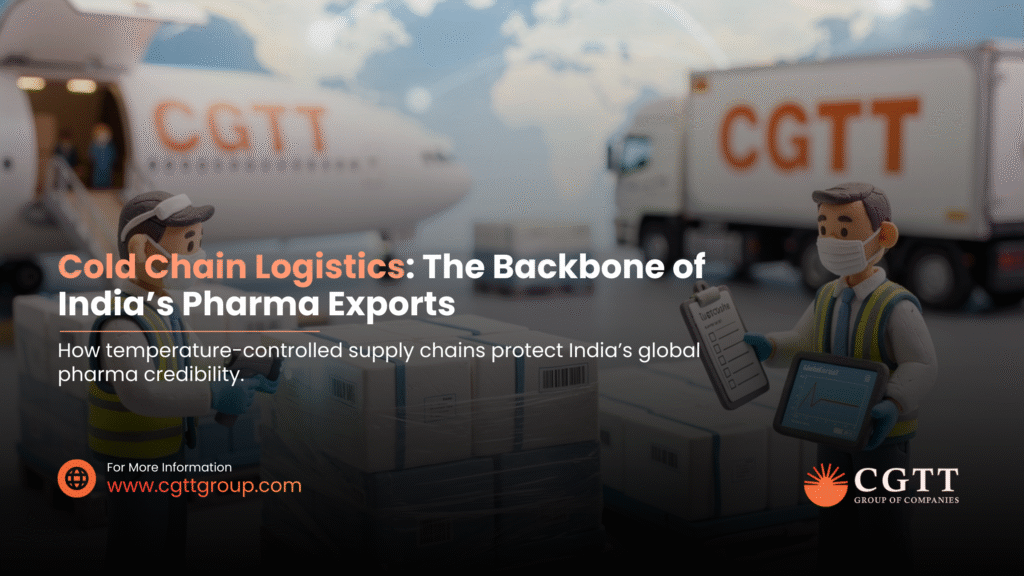
Cold Chain Logistics: The Backbone of India’s Pharma Exports
How temperature-controlled supply chains protect India’s global pharma credibility.
India has emerged as one of the world’s leading pharmaceutical exporters, supplying affordable and high-quality medicines to over 200 countries. From vaccines and generics to complex biologics, Indian pharma products play a critical role in global healthcare systems. At the heart of this success lies a silent but indispensable enabler: cold chain logistics.
Pharmaceutical products are highly sensitive to temperature variations. Many formulations must be maintained within strict ranges—often between 2°C and 8°C—throughout storage and transportation. Any deviation can impact drug stability, efficacy and safety, making temperature control a non-negotiable requirement for exports.
Cold chain logistics ensures continuity and compliance across the export journey—from manufacturing units and cold storage facilities to airports, airlines and last-mile distribution overseas. As Indian pharma shipments move across diverse climates and long international routes, robust temperature-controlled infrastructure becomes essential to prevent spoilage and regulatory non-compliance.
Global regulators and importing countries impose strict standards on cold chain adherence. Exporters are expected to provide complete traceability, temperature records and validated handling processes. A strong cold chain not only protects shipments but also strengthens trust in India’s pharma ecosystem as a reliable global supplier.
As India continues to scale its pharmaceutical exports, investment in advanced cold chain logistics—supported by technology, monitoring and process discipline—will remain a decisive factor. In global pharma trade, cold chain logistics is not just a support system; it is the backbone that upholds quality, compliance, and credibility.
 Follow